

If someone has recently been diagnosed with dementia or their condition has progressed, a dementia care plan can help make their lives easier and give peace of mind to families. knowing they have support in place. It may also need to change if their preferences or medication differ from when a care plan was first made.
We’ll cover what a dementia care plan is and how to put one together.
What is a dementia care plan?

A dementia care plan is a written document that records a person’s care and support needs and sets out exactly how those needs will be met. It combines all the relevant medical information with their daily routines, their preferences and the people involved in their care.
In England, a care and support plan usually follows a care needs assessment carried out by a local authority under the Care Act 2014. It’s created with the person who has dementia, their family, and health and social care professionals, so the plan reflects what matters to them. Every care plan is as individual as the person; it should never be a checklist exercise.
At Sova Healthcare, this is the personalised home care support plan our team sets up with you and your family before care begins, and it’s built to be adjusted as needs change.
What should be in a dementia care plan?
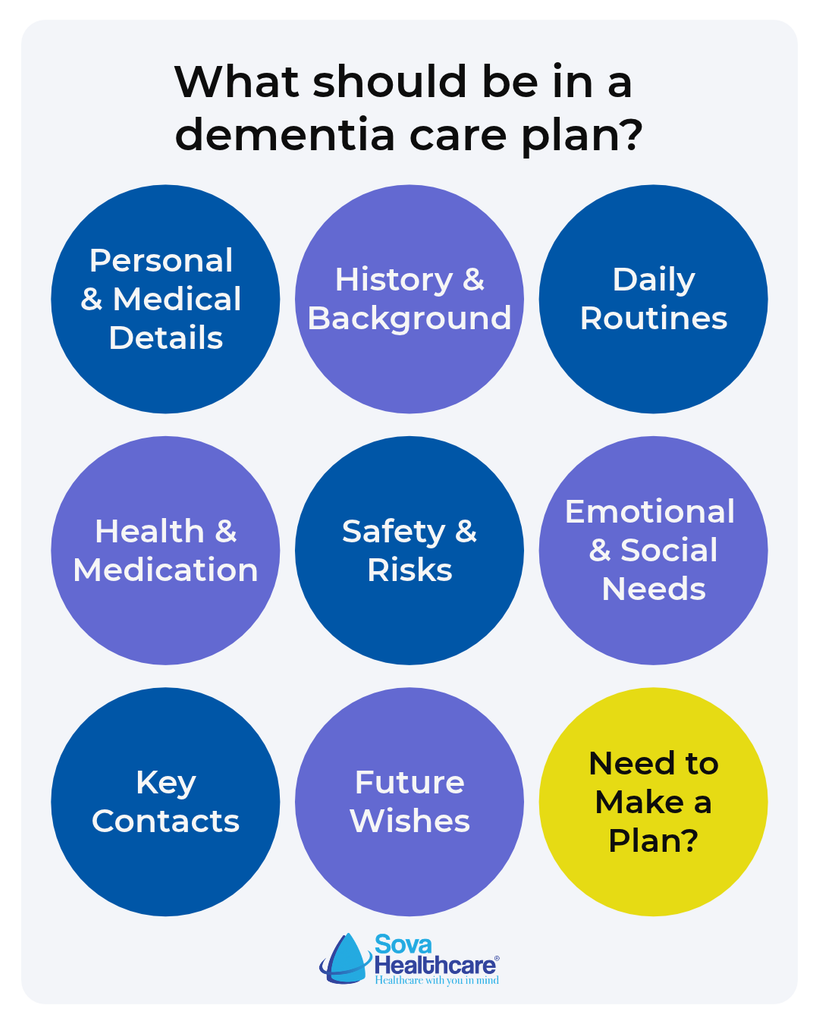
A dementia care plan gives families and caregivers a full picture of the person’s life and history, as well as all their health and medication management in one place. We can break this down into 8 parts:
- Personal and medical details: Full name, date of birth, GP, key diagnoses, current medications and doses, allergies and any other health conditions.
- Life history and preferences: Their background, work relationships, faith, likes and dislikes, and how they prefer to communicate. The Alzheimer’s Society ‘This is Me’ tool is designed for this.
- Daily routines: When they usually wake up and go to bed, meals and favourite foods, washing and dressing preferences, and any activities that bring comfort or a sense of purpose. Our guide to activities and games for people with dementia has ideas that can help.
- Health and medication management: How and when medication is given, appointments to attend, and early signs that a health issue may be developing.
- Safety and risk: Home hazards, falls risk, whether the person may leave the house and become disoriented, and the steps to reduce each risk. Creating a dementia-friendly home is a great way to help keep them safe and comfortable.
- Emotional and social needs: What helps them feel calm, any triggers for distress or agitation, and the social contact that supports their wellbeing.
- Key contacts: Family members, close friends. GP, care workers, and anyone holding Lasting Power of Attorney, as well as other emergency contacts.
- Future wishes: Any advance care planning, including preferences for later-stage care, recorded while the person is able to share them. Where managing money becomes difficult, an appointeeship service can take that pressure off the family.
Nights are often the hardest part of the plan, as close or family support may not be in the same house or close by. If disturbed sleep or distress after dark is a worry, night care at home can put both the person with dementia and their family at ease.
How to create a care plan for someone with dementia
To set up a care plan for someone with dementia, start with a care needs assessment, involving the person and their family in every decision. Record their needs, routines and wishes in one clear document and review it regularly for it to be as accurate as possible.
- Request a care needs assessment from your local council. It’s free and anyone who appears to need care and support can ask for one. Our funding guide explains what financial help is available if you go on to pay for care.
- Involve the person early and capture their thoughts and preferences while they can shape the plan themselves.
- Bring in people who know them, including family, their GP and any current care workers, so nothing important is missed.
- Write it in plain language, keeping copies where carers can find it quickly.
- Review it regularly. Local authority care and support plans are reviewed at least once a year, and sooner if needs change.
Many families build and run a plan alongside a home care provider, who carries out much of the day-to-day support while family stays closely involved. Our dementia care team can help you draw up a plan and deliver it whenever you’re ready.
Need support with dementia care at home?
At Sova Healthcare, our care teams work with families to build dementia care plans tailored to every individual and deliver that support at home. From help with daily routines and companionship to specialist night and live-in care, we’re here to answer any questions about dementia care plans.
Get in touch on 0800 688 8866 or at enquiries@sovahealthcare.co.uk to talk through what compassionate support at home could look like.